A wedding isn't just a project: keeping track of what you feel while planning it
Gathering scattered inspiration, keeping track of what you feel: the two needs no logistics tool covers.
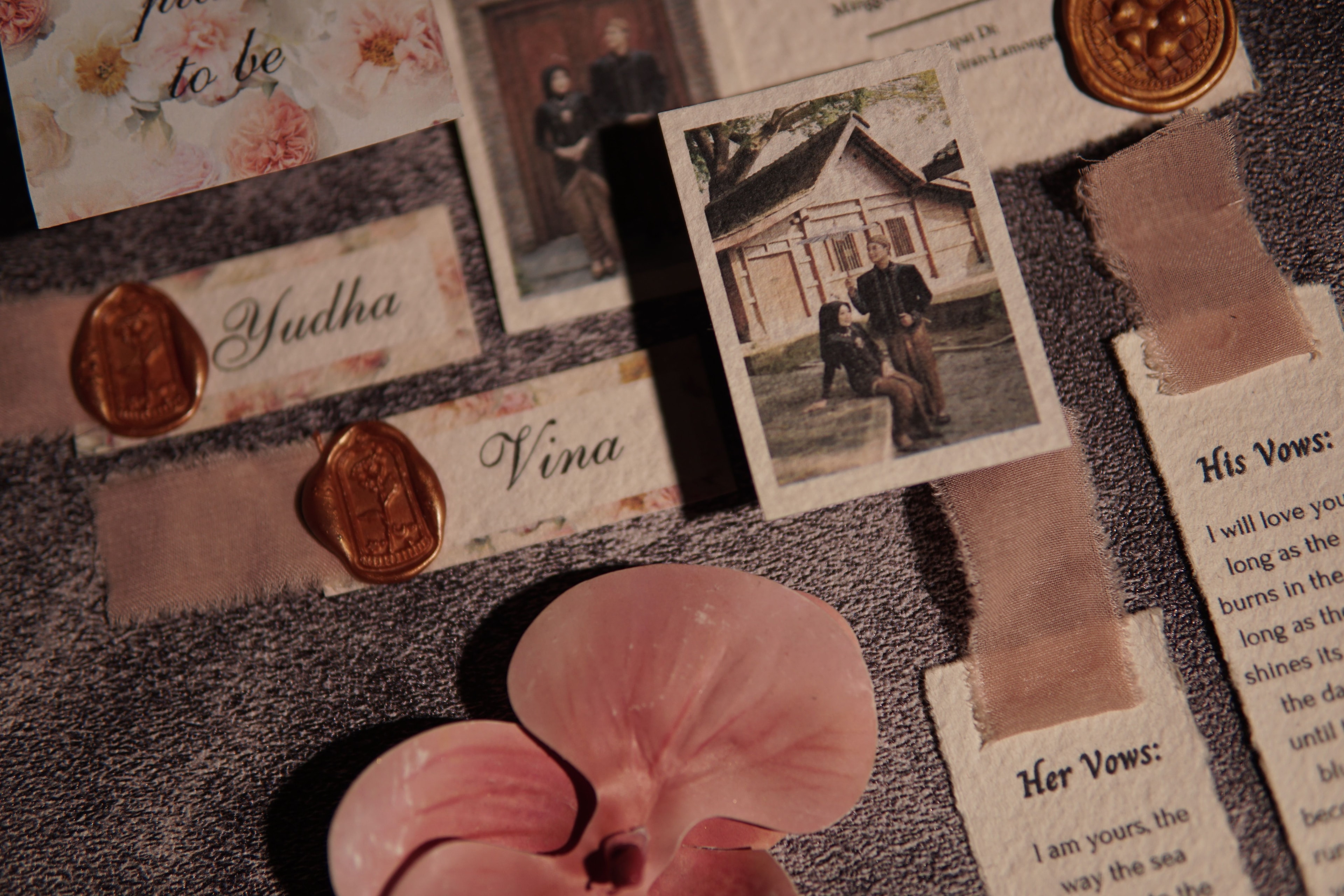
Most wedding planning tools, ours included, spend their time talking about logistics: the budget, the tasks, the guests, the seating plan. That's normal, it's where the mental load plays out, and it's what you come looking for first. But there's a part of the wedding that fits into no timeline box, and that matters just as much: what you feel and what inspires you while you're planning it.
A wedding is prepared over twelve to eighteen months. That's long. During this period, things happen that have nothing to do with logistics: an image that makes you say "that's exactly it, our mood", a conversation where you realise why you're doing all this, a detail you absolutely want to keep, a doubt, a joy. Nobody thinks to archive these things, and they get lost. This article is about the part of the wedding no spreadsheet captures: inspiration and memory. And about why a space dedicated to that, alongside the logistics, makes sense.
Two needs we neglect: gathering inspiration, keeping track
When you prepare a wedding, two things happen alongside the pure organisation, and almost always end up badly managed.
The first is visual inspiration. You see images everywhere: a colour palette on an Instagram account, a table setting in a magazine, a dress, a lighting mood, a type of flowers. You save them all over the place: screenshots in your camera roll, links in your bookmarks, pins on a board, photos a loved one sent you. When it's time to decide, this inspiration is scattered across five places and you can no longer find the image that had struck you.
The second is the memory of the journey. Planning is a period of life, with its high points, and you don't think to record them because you're busy ticking boxes. Yet those are often the moments you'd like to remember afterwards: not the date you signed the caterer's contract, but the day you found the venue, a loved one's reaction, the conversation where you decided to do things your way.
An "Us space" answers both needs. It's the part of the wedding that isn't a to-do, but that still deserves a place of its own.
The moodboard: gathering inspiration in one place
The moodboard is where your visual inspiration stops being scattered.
The idea is simple: a space where you gather the images, palettes, moods that define your wedding. Instead of having references spread between your phone, your bookmarks and your loved ones' messages, everything is together. You see at a glance the aesthetic direction you're taking, and above all, you see whether it's coherent: three colour palettes that contradict each other are noticeable when they're side by side, not when they're in three different apps.
In ÆTHERNA, the moodboard can extract a colour palette from your images, which gives you a concrete thread for the rest: the stationery, the flowers, the table setting. A moodboard isn't just a pretty board, it's a decision tool: it turns a diffuse feeling ("I'd see something soft and natural") into a precise direction you can show a vendor.
And it has a relational use: it's a support for agreeing as a couple. Rather than discussing in the abstract what you like, you put the images side by side, and the disagreement (or agreement) becomes visible. It's much simpler to say "I prefer that mood" by pointing at an image than to describe an aesthetic with words.
The journal: keeping track of what you live
The journal is the other half of the Us space, and it's the most intimate.
The idea: a place to record, as the planning goes on, what you want to keep. Not tasks, not deadlines. Thoughts, moments, decisions and the why of those decisions. The day you visited the venue and knew it was the one. The conversation where you settled a question that stressed you. An idea that came to you and you don't want to forget. A feeling, even a contradictory one.
Why does it matter? Because the memory of planning fades fast, and selectively. After the wedding, you remember the day itself, but the whole period before, with its ups and downs, compresses into a blurry memory. A journal kept even in small touches keeps what would otherwise disappear. It isn't one more constraint (nobody asks you to write every day), it's a place that exists for when you feel like it.
And it's kept as a couple. The couple's shared journal is a place where each can deposit what they feel, and where the other reads it. In a period where you talk a lot about logistics, having a space for the other thing, the very reason for all this work, isn't a luxury.
What disappears fastest isn't the big decisions: you remember the venue you chose for a long time. It's the moments that looked like nothing at the time. The conversation where you settled something that had seemed unsolvable the week before. The visit where someone did something you weren't expecting. The evening you decided you'd never manage it, and the next day when you did. Nobody thinks to write those down, precisely because they happen in the middle of something else. A year later, they're the ones you miss.
Why separate this from the logistics
You might ask: why a separate space? Why not put the inspiration in the tasks and the thoughts in the notes?
Because mixing the two devalues both. Logistics needs to be efficient, structured, action-oriented: it's not the place for an image that moves you. And both inspiration and memory need to breathe, need a calm space where they're not drowned under deadlines and budget alerts. A moment of emotion recorded between two vendor follow-ups loses its place.
Separating the Us space from the rest is recognising that a wedding has two dimensions: the project to run and the story to live. Both deserve a place, but not the same one. The logistics help the day arrive well. The Us space keeps a trace of what that path meant. We cross here a principle we often defend: on the day itself, you'll be too busy, moved and tired to observe your own wedding. What you've recorded before, on the other hand, will stay with you.
FAQ
What does a wedding moodboard really do?
It gathers in one place the visual inspiration (images, palettes, moods) that otherwise scatters between the phone, bookmarks and messages. It lets you see the coherence of your aesthetic direction and show it to vendors. In ÆTHERNA, it can extract a colour palette from your images to serve as a thread for the stationery, flowers and decor.
Do you really need to keep a journal of your planning?
It's not an obligation, it's a possibility. The memory of planning fades fast after the wedding, and selectively. A journal kept even in small touches keeps the moments and decisions you'd like to remember. Nobody asks you to write every day: it's a place that exists for when you feel like it.
How does a moodboard help you decide as a couple?
Because it makes the aesthetic visible. Rather than discussing in the abstract what you like, you put the images side by side and the agreement (or disagreement) becomes obvious. It's far simpler to point at an image to say "I prefer that mood" than to describe a style with words.
Why separate inspiration and memories from the logistics?
Because mixing the two devalues them. Logistics must be efficient and action-oriented; inspiration and memory need a calm space. A moment of emotion recorded between two budget alerts loses its place. A dedicated space recognises that a wedding is both a project to run and a story to live.
Are the journal and moodboard shared within the couple?
Yes. The moodboard is built together (a support for agreeing on the aesthetic) and the journal is kept together (each can deposit what they feel, the other reads it). In a very logistical period, having a space for the other dimension, the one that gives meaning to everything else, has value.
ÆTHERNA gives you an Us space, alongside the logistics: a moodboard that gathers your inspiration and extracts a palette, and a shared journal to keep track of what you live. Free up to 50 guests, no time limit, no credit card. aetherna.fr
Your wedding starts here.
Start planning