Wedding seating plan: our method
How to take the drama out of your wedding seating plan: the method we used for our own, the steps, the choices, and the decision we made before placing anyone that changed everything.
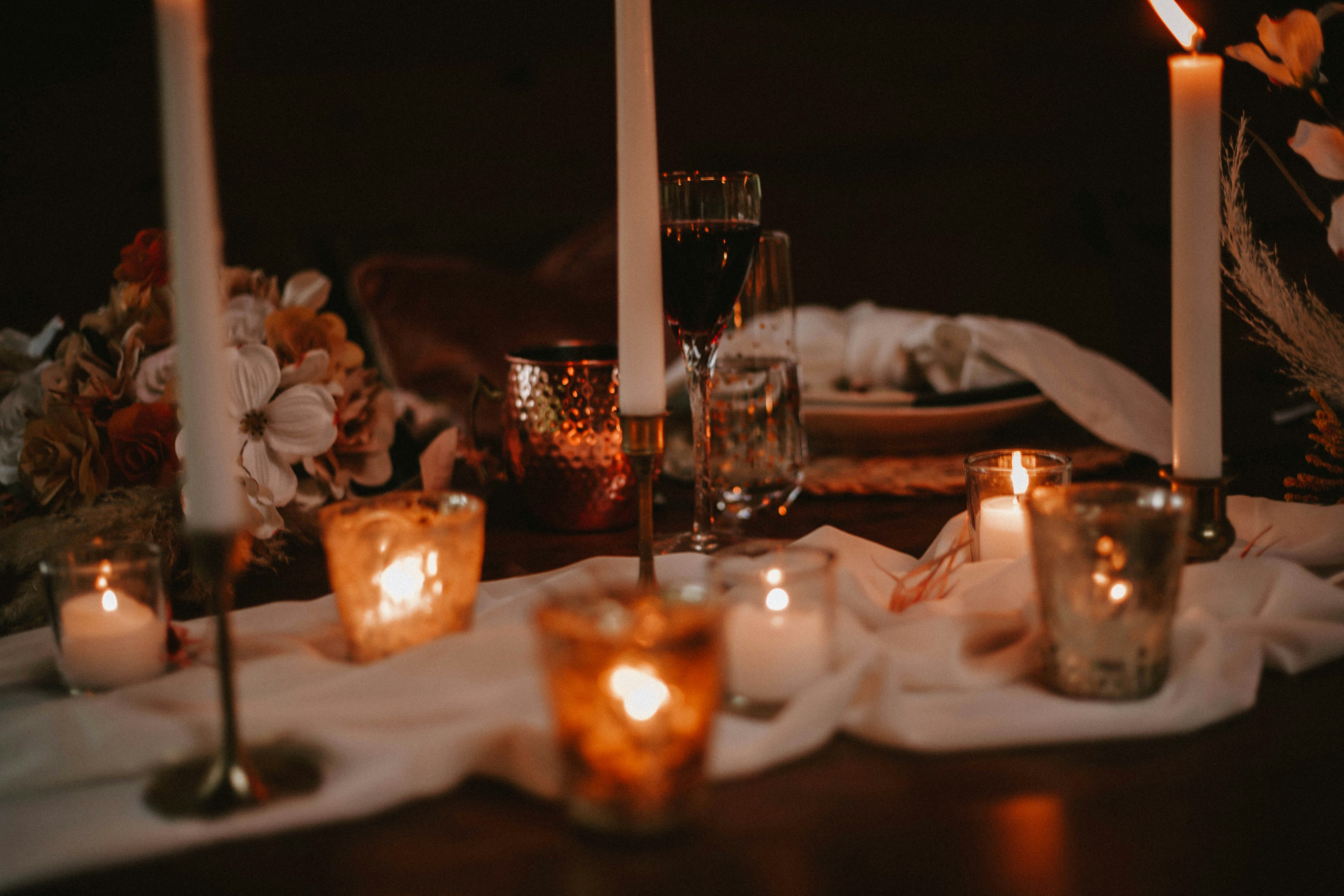
Lucky for us, the seating plan for our wedding may not have been as stressful as it could have been for other couples. It wasn't entirely chance either: with our caterer, we'd opted for a longer-than-average standing cocktail hour. The result ? Guests moving around ! As a result, they spent relatively little time seated, around 1.5 hours over the whole evening. Without us anticipating it, this choice lowered the weight of the exercise before we'd even started placing anyone.
It can be worth checking upstream: how long your guests will actually spend seated. If it's 1.5 or 2 hours, placement matters far less than if it's 4 hours. The shorter the meal and the more your atmosphere lives standing up, the lighter the seating plan weighs.
That said, even 1.5 hours, it counts. We did the exercise with around 150 guests, families with different dynamics, friends who didn't all know each other. Here's how we went about it, and what was worth the time for us.
First things first: knowing who's coming
For us, the seating plan really started when the RSVPs were solid. Not before. As long as we were missing thirty replies out of a hundred and fifty, we were on quicksand. Every late confirmation or cancellation shifted the table balance.
A useful question to ask yourselves early: when do you stop chasing your guests? For our wedding, we set D-30 as the RSVP cut-off date. Beyond that, we made decisions without waiting for the latecomers. If someone confirmed at D-15, we slotted them in, but the plan didn't get rebuilt around them.
That doesn't mean nothing will move anymore. It almost always does. A cousin announces he's coming after all, a friend cancels at D-7. The point of D-30 for us was to lock down the essentials so we could put a first stable version on paper, not to bolt everything down to the day.
Quick note on unexpected +1s. They can happen: someone bringing a new girlfriend without warning, a cousin showing up with her son. Rather than stressing, better to leave yourselves a margin. We come back to this at the end.
Step 1 — Knowing your tables
Before placing anyone, you need to know where you're placing them. Concretely: how many tables, and what capacity?
Round tables are the most common at weddings. For reference:
A round table 1.5m in diameter seats 8 to 10 people
A round table 1.8m seats 10 to 12 people
A rectangular table 2m by 0.8m seats 6 to 8 people
Beyond 10 guests on a round, talking to someone across from you gets hard. The distance means the voice gets lost in the room's background noise. Below 8, the space is underused. The sweet spot for good conversation often sits around 8 or 9 people per round table.
Our base logic was to aim for homogeneity. If you have 80 guests outside the head table and you want tables of 8, that's 10 tables. If you have 75 guests, you have a choice: 9 tables of 8 (with 3 extra spots to leave empty or assign to solos), or 8 tables with 9 to 10 people each (tighter but no empty spot). The mental math: divide for a round number, then adjust.
A tip that helped us a lot: leaving 1 or 2 spare seats on the most "flexible" tables. For Jour J unexpected +1s, it's probably the simplest fix, no panicked reshuffle at 6pm.
Step 2 — Balancing mixing and comfort
This is the big question: do you mix the families or leave the natural groups together?
Three schools exist.
The Care Bears school. Everyone mixes at every table. The groom's friends with the bride's family, colleagues with cousins. The idea, create encounters, make the party come alive. It works when guests are numerous, open, mostly young. It struggles with shy guests, seniors who don't know anyone, or a heterogeneous crowd.
The pragmatic school. You keep the natural groups. School friends together, close family together, colleagues together. The idea, that everyone is comfortable, even if the "encounter" effect is dimmer. It works well for weddings where guests come from very different worlds and don't have much to say to each other spontaneously.
The middle school (ours). A mix by affinities. You group guests by what they have in common, not by which side of the couple they came from. For our wedding, we mixed some of my friends with friends of my wife's because we sensed they'd hit it off (same age range, similar interests). The other way round, we kept some families together because they had little in common with the rest.
Our tiebreaker when we hesitated: attitude > interests > age. We looked first at whether people were extroverts or reserved. Then at whether their conversation topics overlapped. Age came last. For us at least, a senior with a sense of humor was often better placed with open-minded young people than with other closed-off seniors.
There's no right school. You'll find yours. The only criterion that really matters: that most of your guests have a good meal.
Step 3 — The cases that make you sweat
Here are the topics wedding forums overflow with. Here's how we handled them at ours.
The parents. What do you do when parents (separated or not) don't get along with the in-laws, or even with each other? The universal rule you read everywhere: separate them. Probably fair, but to my mind incomplete.
For our wedding, we made a possibly counterintuitive choice. We didn't put our parents together at one head table, even though they get along well. We placed each one with their own immediate family (siblings). The idea: give them a real privileged moment with their close family, instead of the symbol of being "next to their child who's getting married". They'd have dozens of chances to find each other during the day anyway: at the cocktail, on the dance floor, during the speeches.
The friends. Mixing the groom's friends and the bride's friends can be a good idea when there's possible synergy. Better not to force it. For our wedding, we put the "geeky" friends together, the "more formal" friends together, and we dared mix some of my wife's friends with mine only when we sensed the topics would overlap.
Solo friends are best slotted into tables where they'll feel at ease. The "singles' table" is a classic awkward move that isolates instead of including.
The cousins, aunts and uncles. We often kept them separate. Generational mixing can hold some cousins back. They don't dare loosen up in front of the elders. Our choice: cousins who get along together, aunts and uncles at another table.
Watch for old standoffs between cousins themselves. Sometimes you know two of them shouldn't be at the same table. That's not a problem, it's actually useful to spot early. Better to catch it a month before than during the meal.
The "social glue". Those precious guests who get along with everyone, who add warmth, who calm the shy ones. Worth spotting them early. They're often the ones who save the trickier tables: the table with two strong personalities, the table that lacks a bit of energy, the table where you had to place a distant cousin no one knows. A social-glue guest often makes all the difference.
Those who weigh down the mood a bit. Many couples have at least one or two guests whose conversation drags: who complain, who criticize, who bring everything back to themselves. The most common reflex is to spread them across several tables with "patient" people to balance things out. Our choice was the opposite: we grouped them together. For two reasons. First, they often find common ground (these profiles tend to recognize each other). Second, you don't expose the rest of the room to their atmosphere. The choice can feel a bit harsh, and it is, but it protected the rest of the meal for us.
The kids. If you have more than five, a dedicated table with a babysitter or an activity corner can be very useful. If they're very few, they can stay at their parents' table. The kids' table really only works if there are enough of them to entertain themselves.
Step 4 — The head table
Three classic configurations:
Couple alone. The two of you facing the guests. Romantic, intimate. Asks you to accept the "set apart" effect of the couple, but that's also the point. Works in any room size.
Couple + witnesses. Your witnesses and their partners around you. A warm configuration: your closest friends are right there, and they know how to make you laugh if you have a lull between two speeches.
Couple + parents and witnesses. The traditional version. Symbolic, but can be uncomfortable if parents are separated or on bad terms.
None is better than the others. Our choice: the first one. Just the two of us at the head table, no witnesses. Partly because we wanted to be deliberately a little apart, that was our moment. And in any case, we spent maybe 45 minutes seated together over the whole meal. The rest of the time, we were standing, going from table to table. The head table, for the couple, stays more of a scenographic idea than a place where you actually live the evening.
Step 5 — The tools
Three big options, and all three work.
Post-it on a big cardboard. The artisanal method. You draw your tables on a big cardboard, you write guest names on post-its, you move them around at will. Visual, fast, pleasant. Drawback: hard to share with your coordinator, and a gust of wind can scatter everything.
Excel or Google Sheets. The spreadsheet method. One column per table, names below. Easy to share, fast to modify. Drawback: no visual representation of the room, you don't "see" the plan come together.
Dedicated tool. Place Your Guests, ÆTHERNA, and others. Drag and drop, capacity alerts, sharing with the caterer. Drawback: you have to commit, take 30 minutes to learn the tool.
None is mandatory. To each their own. The criterion that matters most to me: being able to move guests around without starting from scratch every time.
Step 6 — Planning for the unexpected
Whatever work you've put in, things will move until the last minute. Someone might bring a surprise +1. Someone might cancel that morning. Someone might switch their menu at the last second.
Three principles to avoid panic.
Avoiding overloaded tables. If your round tables can fit 9 or 10 people, better to plan for 8 by default. That margin absorbs most unexpected +1s without drama.
Keeping your plan secret until the Jour J. If you reveal it to your parents or your mother-in-law three weeks ahead, you'll likely get fifteen change requests. "Can you put Tata next to Bernard after all?" None of these requests is neutral, and each often calls for more. Better to keep it to yourselves, validated only by your coordinator or your witnesses.
Designating a "plan keeper". Someone (your wedding planner, your coordinator, or a witness who's not too caught up in the emotion) who'll have the final version in hand, who'll handle last-minute adjustments, and who won't bother you with the details. You'll be elsewhere.
Recommendation. Something rarely said in articles about seating plans: on the Jour J, you won't really have time to judge what's happening at your tables. You'll be elsewhere. Dancing, talking with your witnesses, hugging your grandmothers, running short on time. Half of your guests will probably be standing, looking for each other between tables. The plan you worked on for a month, you'll likely glance at it three distracted times during the evening. And that's how it should be. The preparation work you're doing isn't there for you to admire on the Jour J. It's there to give the right frame to the people standing by you that day.
To wrap up
There's no perfect seating plan. There's yours, made with what you know about your guests, and with the intention that they'll have a good time. At the meal, you might see your parents laughing with their siblings. You might see your friends getting to know each other two tables over from yours. And you, you'll enjoy. The plan, you've done it. It's up to your guests to live it now.
It's the two of you now.
How ÆTHERNA helps you on this
If post-it or Excel works for you, that's just fine. If you want a tool built for this, here are three mechanics we've built into ÆTHERNA:
Drag and drop. You grab a name, you drop it on a table. No keyboard shortcuts to learn.
Dynamic capacity. Each table shows its capacity. When it's full, the alert is clear and unambiguous.
Undo in one click. A Reset button to bring back the previous arrangement if you change your mind.
ÆTHERNA is free up to 50 guests for couples. To explore the feature: aetherna.fr/seating-plan.
What ÆTHERNA doesn't do
ÆTHERNA doesn't decide for you. ÆTHERNA doesn't know your cousin got divorced last year, or that your best friend is on bad terms with her sister-in-law. The knowledge of humans is yours to bring. The tool keeps the mechanics smooth, but the work of listening, remembering, and tact is yours.
Your wedding starts here.
Start planning